
GAA Performance
How to Get Faster for GAA
A practical guide to getting faster for Gaelic football and hurling: acceleration, sprint exposure, strength work and the mistakes that cap most players' speed.
By Cillian Bonnar · 7 min read ·
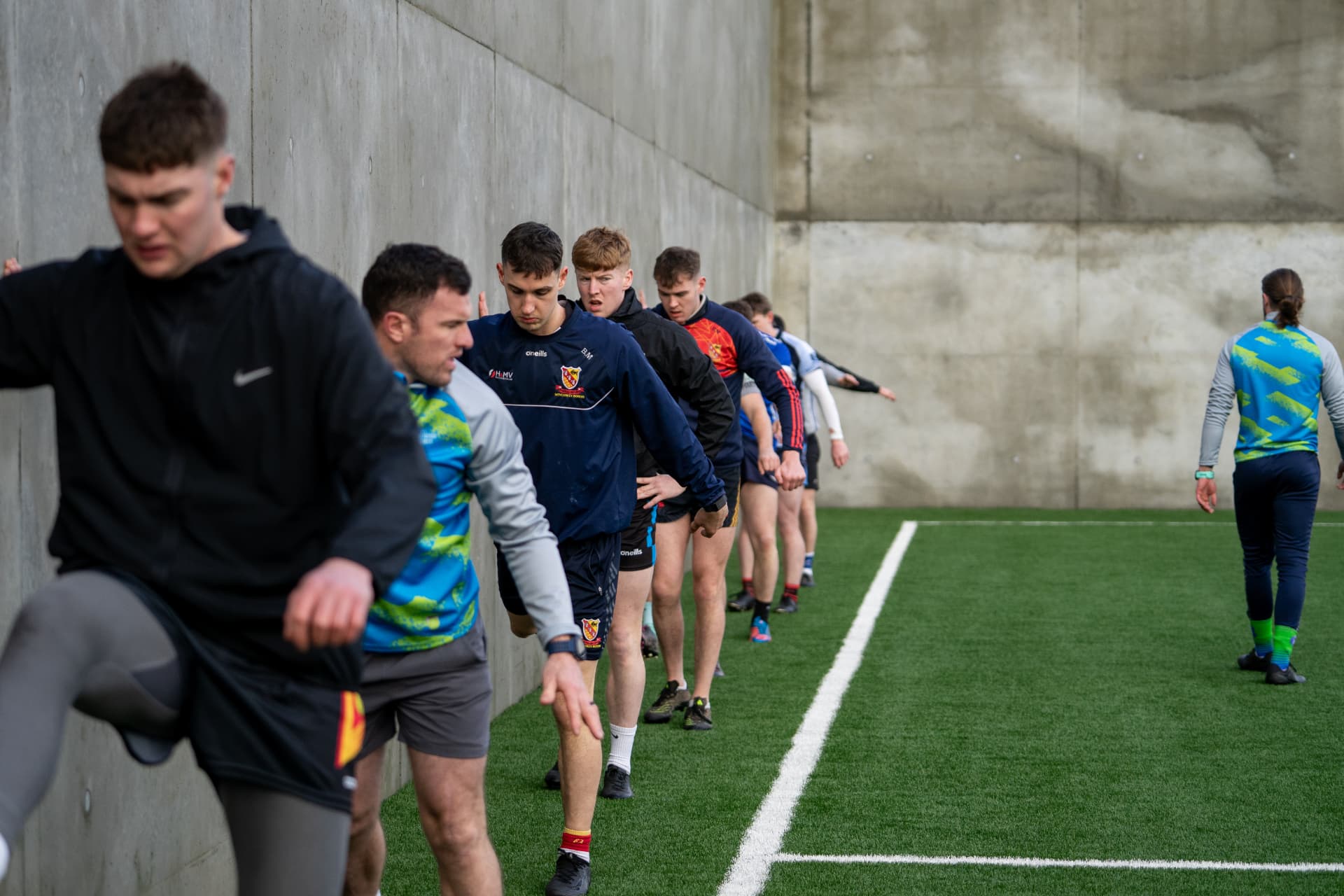
Speed in a GAA match is rarely about top-end running. It is about the first few steps: getting out in front of a man, closing a gap, turning and going again. That is a trainable skill, and most players never actually train it.
Separate acceleration from fitness
Sprint work done at the end of a session, on tired legs, in the middle of a conditioning block, is conditioning — not speed training. Speed is a quality you train fresh, with long rests, and stop as soon as the quality drops.
- Short sprints of 10-30m, early in the session
- Full recovery between efforts: 60-120 seconds minimum
- Low total volume — a handful of quality efforts beats twenty tired ones
- Stop the drill when times slow, not when the clock says so
Get stronger, especially in one leg
Sprinting is the application of force into the ground in a very short window. If you cannot produce much force, there is a hard ceiling on your speed. Squats, hinges, and single-leg work raise that ceiling, and the posterior chain in particular protects hamstrings when you do start running fast.
Learn to decelerate
Change of direction is mostly braking. Players who cannot stop efficiently take extra steps to turn, which is why they look slow even when they can run fast in a straight line. Deceleration drills and eccentric strength work fix that, and they also reduce the injury risk that comes with hard cutting.
Expose yourself to near-maximum speed
The most common gap in club GAA training is that nobody ever runs properly fast until a championship match demands it. Regular, low-volume exposure to 90-100% sprint speed through the year is both a performance tool and the best hamstring insurance available.
Manage the fatigue
You cannot train speed in a permanently exhausted body. Pitch sessions, matches and gym work all draw on the same account. In-season, that usually means fewer and sharper gym sessions, protecting the days before a match, and accepting that fitness work has a cost.
A simple weekly shape
- Off-season: 2-3 gym sessions, 1-2 dedicated speed sessions, base running
- Pre-season: strength maintained, sprint and power volume increased
- In-season: 1-2 short gym sessions, speed kept in small doses, load managed around fixtures
Get those pieces in the right order and speed improves without adding hours to your week. Get them in the wrong order and you will train hard all year and arrive at championship no faster than you started.
Next step
GAA Strength & Conditioning
See how a full GAA strength and conditioning plan is structured across a season.